AICIS Annual Declaration Due 30 November: What Importers Must Lodge
The AICIS annual declaration for 2025–26 is due by 30 November 2026. Here is who...
Posted on 8 Sep 2026

Two announcements in eight days have flipped Australia’s lithium sector from “care and maintenance” to “restart”, and lithium mine reagent supply is about to feel it. On 29 August Core Lithium confirmed mining had restarted at the Grants pit at Finniss in the Northern Territory. On 5 September Mineral Resources and Ganfeng signed off on a A$490 million expansion of Mt Marion in WA, with A$240 million of it for a brand-new flotation plant (Source: The Metalnomist, 29 Aug and 5 Sept 2026).
Project data in this article is as at 5 September 2026.
Add MinRes’s restart of Bald Hill and PLS’s readiness work on the idled Ngungaju plant at Pilgangoora. That is the first coordinated supply response since the 2024–25 lithium winter. Every one of those plants runs on imported chemicals. Those chemicals ship through Asian ports that just endured four typhoons in six weeks. MinRes also assumed spodumene concentrate (SC6) at US$2,700/t when it projected a payback of under a year on Mt Marion (Source: The Metalnomist, 5 Sept 2026).
If you run procurement, processing or HSE at a hard-rock lithium operation, or supply one, here is what the restart wave means for your reagent book.
Finniss was scheduled to process first ore in the September 2026 quarter and ship first spodumene concentrate in the December quarter. It targets around 100,000 t of 5% Li₂O concentrate from ~800,000 t of Grants ore. The A$274 million BP33 underground contract lifts the operation to 1.2 Mt/yr of ore by mid-2028 (Source: The Metalnomist, 29 Aug 2026).
Mt Marion’s expansion raises SC6 output from 500,000 t/yr to 600,000 t/yr. It also adds an underground mine contributing up to 40% of feed. Critically for reagent buyers, it replaces the low-grade SC3.5 product with a minimum SC5 grade via flotation. Construction starts in the July–September 2026 quarter, with commissioning inside 12 months (Source: The Metalnomist, 5 Sept 2026).
The macro tailwind is real. The combined value of the world’s top 50 miners jumped US$357 billion in August 2026, the biggest monthly gain on record (Source: MINING.COM, 4 Sept 2026).
A dense-media-separation (DMS) plant like Finniss’s is reagent-light, using ferrosilicon and water. However, the chemical bill changes shape the moment an operator adds flotation to lift grade and recovery:
Then there are the site utilities every remote mine runs. These include sodium hypochlorite for camp water and cooling-circuit biofouling, HCl for scale removal, and surfactant-based dust suppressants.
Note what is not on the Australian shopping list any more: the lithium hydroxide refinery reagents. Albemarle idled its last operational Kemerton train on 11 February 2026. That leaves Tianqi/IGO’s Kwinana plant, which lost A$955 million in FY25, as the only domestic converter (Source: Australian Mining and S&P Global, 2026). The sulphuric acid, soda ash and lime that go into refining are now largely a Chinese problem. Australia’s lithium chemical demand is concentrator demand: collectors, caustic, silicate, hypochlorite and HCl.
Three things make this restart different from 2022’s.
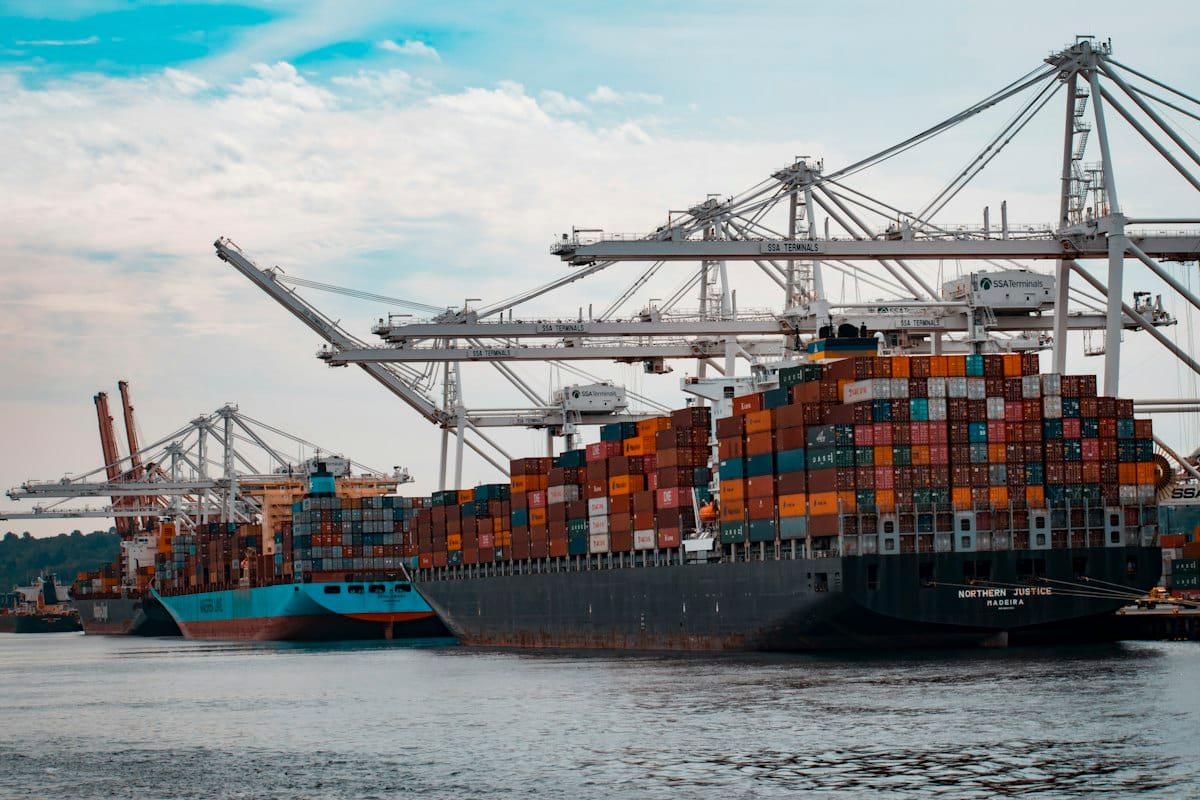
First, the freight lane is damaged. Four major weather events since mid-July 2026 have hit Shanghai, Ningbo, Shenzhen and Busan back-to-back. They tied up more than 2.4 million TEU of vessel capacity in North Asia and pushed container rates and lead times out (Source: Price Watch via openPR, Aug 2026). A 10-week Asia–Fremantle lead time on packaged reagents is now optimistic.
Second, the acid market is still broken. The Strait of Hormuz has been effectively closed to commercial shipping since late February 2026. China’s sulphuric acid export prohibition has been in force since 1 May 2026 (Source: Australian Compliance Institute, 2026). Mines that use sulphuric acid for pH control or scrubbing are already substituting to HCl. That drags HCl demand and price with it.
Third, caustic looks cheap on paper but not on the wharf. North-East Asian liquid lye has been assessed at just US$380–393/dmt on persistent Chinese oversupply (Source: ChemTradeAsia, 2026). The catch is that landed cost into Port Hedland or Darwin depends on freight, isotank availability and dangerous-goods surcharges, not the FOB number. A cheap FOB quote can therefore land far higher on site.
Qualify a second collector source now. Fatty-acid collectors are the most mineralogy-sensitive reagent in the circuit. A substitute TOFA grade with a different rosin-acid content will move recovery by several percentage points. Run bench flotation on any alternate before you need it.
Lock Q4 caustic and HCl volumes. Both are commodity products with thin Australian spot depth. Restarts at Finniss, Bald Hill and Ngungaju will all draw on the same regional stocks in the same quarter.
Specify the packaging, not just the chemical. 1,000 L IBCs, 20 ft isotanks and bulk road tankers each have different lead times. They also carry different demurrage exposure in a congested port. Decide early.
Re-check SDS and GHS classification. Caustic soda, HCl and sodium hypochlorite are all Class 8 dangerous goods. Restart crews rotating in from other sites need current SDS, not the 2023 versions in the shed.
Build a 6–8 week buffer, not 2. A single missed sailing now costs a fortnight. At an assumed US$2,700/t SC6, a day of lost throughput at Mt Marion’s expanded rate is worth roughly US$4 million of concentrate. A reagent stock-out is the most expensive way to save warehouse space.
Talk to the UD Trading team about lithium flotation and mine-site reagent supply. Email sales@udtrading.com.au or visit udtrading.com.au. See our mining chemicals range.
The AICIS annual declaration for 2025–26 is due by 30 November 2026. Here is who...
Omega's Canyon North-1 hit record gas shows in Queensland's Taroom Trough. Here is what public...
WA has extended the new phosphine exposure limit to 1 December 2029, and Victoria has...
October freight reports put numbers on vessel delays and surcharges. Here is what they mean...
A solar desalination unit near Esperance is making news. Behind every brackish water desalination system...
Australia proposes IChEMS Schedule 5 for nonylphenol ethoxylates. Comments close 23 October 2026. Here is...
